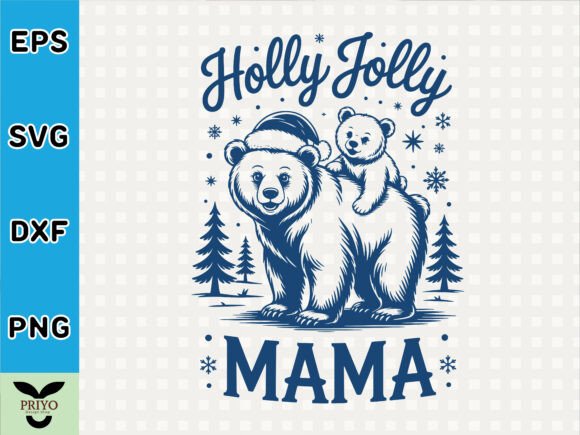
Christmas Holly Jolly Mama T-shirt
A Designer’s First Look: Cheerful, Clear, and Craft-Ready
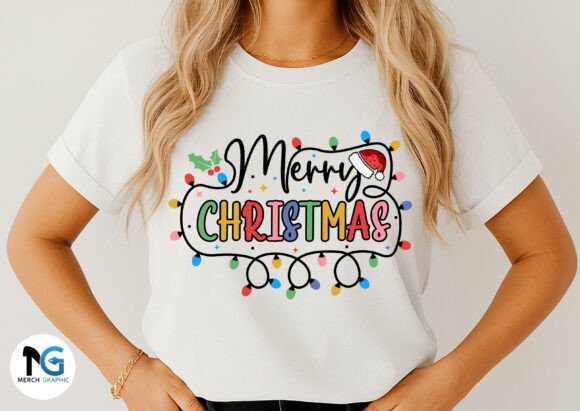
When I opened the Christmas Holly Jolly Mama T-shirt embroidery file, my first thought wasn’t “cute” — it was “usable.” That matters. As someone who’s stitched hundreds of holiday designs for Etsy sellers, boutique clients, and custom gift orders, I’ve learned that charm without clarity doesn’t translate well under needle and thread. This design lands right in the sweet spot: bold enough to read at a glance, friendly enough to feel personal, and structured enough to hold up across fabric types. The holly motif wraps gently around the phrase, balancing organic shape with clean lettering — no fussy swirls or over-rendered berries that would collapse into mush during satin stitch execution.
Where It Shines: Real Projects, Real Stitching
I tested Christmas Holly Jolly Mama T-shirt on a medium-weight cotton twill tote bag — a common small shop staple — and later on a brushed fleece sweatshirt for a holiday pop-up. On both, the design held its personality. The lettering stayed legible even at 3.5 inches wide, and the holly sprigs didn’t bleed or blur. That’s critical for custom apparel and embroidered patch work, where customers expect crisp edges and consistent spacing. It also translated beautifully onto a tea towel — the open layout left room for the fabric texture to show through without competing, making the finished product feel handmade, not mass-printed.
For baby embroidery or nursery decor, I’d scale it down slightly (to ~2.75") and use soft pastel thread colors — mint, blush, and cream — to keep it gentle but still recognizable. On a lightweight cap? I’d avoid the full design unless the hoop size allows full stabilization; instead, I’d isolate just the “Mama” with one small holly leaf beside it. That kind of flexibility is rare in holiday-themed machine embroidery design files — most lean too literal or too dense. This one breathes.
Where to Pause: Texture, Scale, and Fabric Choices
Don’t rush this onto stretchy jersey tees without testing. The letterforms are confident but not ultra-bold — fine for stable knits with tear-away stabilizer, but potentially fragile on high-stretch blanks without added cutaway backing. Likewise, on dark fabric, double-check contrast: some red/green thread combos mute easily, especially in fill-stitch holly leaves. I recommend stitching a quick black-and-white mockup first — it reveals where detail gets lost before you commit thread and time.
Curved surfaces like baseball caps or toddler beanies need special attention. The arc of the phrase works *with* curvature, not against it — a quiet win — but avoid placing it too close to the bill seam or crown point where distortion creeps in. And if you’re planning applique design versions, note that the holly elements are designed as part of the whole composition, not as separate layers. That’s fine for direct embroidery, but limits quick swaps if you want seasonal color variations.
Stitch Density & Detail Integrity
The stitch density feels intentional — not overloaded, not sparse. No long satin runs risk puckering on lightweight cotton, and no tiny interior details (like berry highlights) that vanish on 80-weight thread. That means fewer re-hooping moments, less thread breakage during production, and more reliable results across different machine brands. For commercial embroidery, consistency builds trust. When your third client orders the same tote bag design and gets identical clarity, they’re more likely to reorder — or refer you.
Design Assets That Support Your Brand — Not Distract From It
As a designer reviewing digital embroidery file assets for craft businesses, I pay close attention to how a design supports — rather than overshadows — the maker’s voice. Christmas Holly Jolly Mama T-shirt does this quietly but effectively. It’s warm without being cloying, festive without leaning into cliché, and inclusive without trying too hard. That makes it ideal for Etsy seller listings where shoppers scroll fast and decide in seconds. It reads as “handmade product,” not clipart. Pair it with neutral packaging and a short story about why “Mama” + holly resonates in December, and you’ve got a personalized gift that feels curated, not generic.
It also holds up in printable mockups — the clean negative space around the phrase gives breathing room for text overlays, pricing, or shop branding. That’s a subtle but real advantage for small shop product photography and social media posts.
Practical Notes Before You Stitch
- Always test on scrap fabric first — especially with new stabilizer combos or thread brands.
- Review thread color contrast on both light and dark backgrounds before finalizing your palette.
- Confirm hoop size compatibility; if your smallest hoop is 4x4", check whether the full design fits comfortably with margin.
- Inspect small corners and tight curves — look for potential nesting or jump-stitch buildup in the file preview.
- Use proper stabilizer: medium-weight cutaway for knits, tear-away for stable wovens, and fusible for lightweight linens.
- Verify licensing terms before selling finished items or bundling the embroidery file in digital product kits.
Final Thought: A Design That Sells Itself — Because It Works
This isn’t just another holiday graphic. The Christmas Holly Jolly Mama T-shirt succeeds because it understands context: it knows it’ll live on a sweatshirt worn to preschool pickup, a pillow cover gifted to a new mom, or a kitchen towel hung in a bustling holiday kitchen. It’s designed for people — not pixels. If you’re curating design assets for a craft business, building a holiday collection for your small shop, or sourcing reliable graphics for client projects, this one earns its place. It’s cheerful, capable, and quietly professional — exactly what a working designer needs when December deadlines loom and quality can’t be compromised.