Mama Goose on the Loose T-shirt Design
First Impressions: Playful, Warm, and Instantly Recognizable
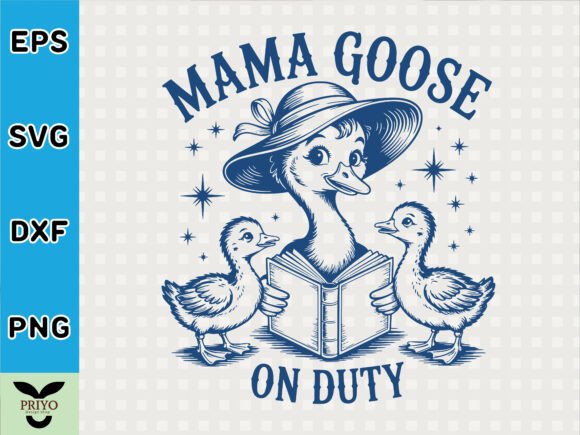
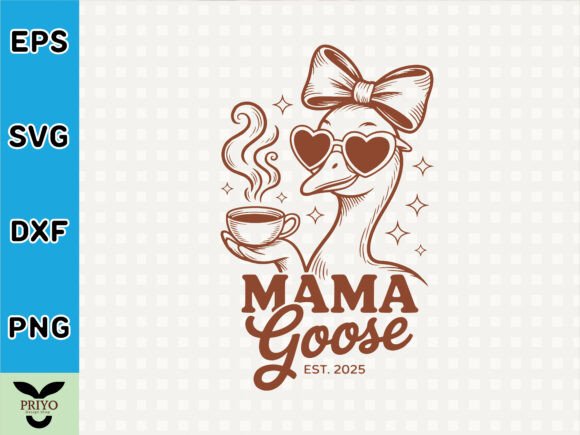
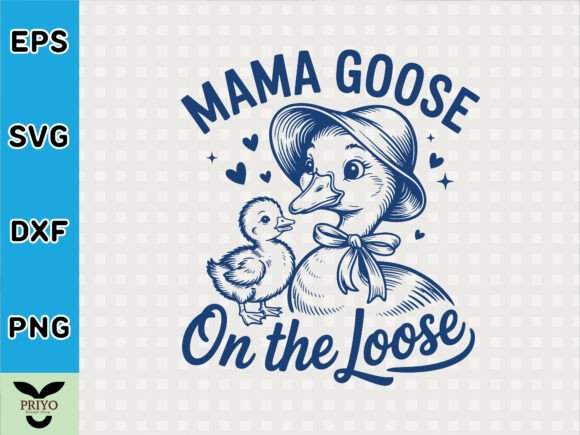
When I opened the Mama Goose on the Loose T-shirt Design file, I didn’t just see a graphic—I saw a mood. It’s cheerful without being cutesy, bold without feeling aggressive, and whimsical without sacrificing clarity. The goose has personality: one wing slightly raised, beak open mid-honk, eyes bright and mischievous. There’s gentle curvature in the lines—no harsh angles—and the overall shape fits comfortably within a medium oval footprint. That tells me it’s built for real-world embroidery, not just screen display. As a designer who’s stitched hundreds of animal motifs for baby onesies, boutique aprons, and holiday tote bags, I immediately pictured this on a soft organic cotton tea towel or a lightweight unisex sweatshirt—where charm matters as much as stitch integrity.
A Real-World Test: Embroidering This on a Linen-Cotton Blend Tote Bag
Last week, I prepped a small-batch run of embroidered tote bags for a local nursery shop. I chose Mama Goose on the Loose T-shirt Design for three reasons: its scale works well centered on a 15" x 15" panel, its outline is clean enough to hold up at 3.5" wide (our standard hoop size), and its energy matches the shop’s “gentle playfulness” brand voice. I ran it on a medium-weight linen-cotton blend with tear-away stabilizer underneath and light cutaway on top. The result? Crisp satin-stitched edges, smooth fill-stitch feathers, and zero thread nesting—even in the curved neck area. Customers loved how the goose “popped” without looking stiff or over-digitized. One mom even asked if it was hand-drawn (it’s not—but that’s a compliment any embroidery designer cherishes).
Where It Shines—and Where It Needs Extra Care
Mama Goose on the Loose T-shirt Design excels in custom apparel, baby embroidery, and small-shop merchandise where warmth and approachability drive sales. It reads beautifully on sweatshirt embroidery, embroidered patches, and pillow covers—especially when paired with tonal thread colors like oatmeal, slate blue, or moss green. It also translates cleanly into printable mockups for Etsy sellers: the silhouette holds up in black-and-white previews, and its proportions stay balanced across fabric types.
That said, proceed thoughtfully with stretchy fabrics (like jersey knits) or textured surfaces (like terry cloth towels). The design’s moderate stitch density means it won’t overwhelm thin fabric—but test first on scrap material. On dark fabric, avoid pale yellows or creams unless you’re using underlay stitches or topping. And skip tight curves like cap fronts unless you’ve confirmed the design’s smallest elements (like the goose’s eye dot or wingtip curve) digitize cleanly at reduced scale. Tiny lettering isn’t part of this motif—which is smart. It keeps focus on expression, not readability.
What This Design Says About Your Finished Product
When customers see Mama Goose on the Loose T-shirt Design stitched onto a handmade product, they don’t just register “a goose.” They sense intention. Thoughtful spacing. A balance of simplicity and detail. That builds trust—especially for Etsy sellers or craft fair vendors whose buyers are choosing handmade over mass-produced. For personalized gifts or nursery decor, it adds quiet storytelling value: playful but grounded, joyful but not chaotic. It supports brand consistency too—if your shop leans into earthy, mindful, or gently humorous themes, this design reinforces that without needing explanation.
Visually, it avoids the pitfalls of over-rendered graphics: no micro-details that vanish in fill stitch, no overlapping layers that cause registration drift, and no fragile thin lines that break during washing. That directly impacts product value. A well-executed Mama Goose on the Loose T-shirt Design on a kitchen towel doesn’t just look nice—it feels durable, considered, and gift-ready.
Practical Notes Every Embroidery Designer Should Check
- Always test first: Run Mama Goose on the Loose T-shirt Design on scrap fabric matching your final substrate—same stabilizer, same thread, same machine tension.
- Review thread color contrast: Especially on light backgrounds, ensure the beak or eye highlights read clearly. A single tone can flatten its expression.
- Confirm hoop size compatibility: While it scales well, verify the largest version fits your most-used hoop before digitizing adjustments.
- Inspect small details: Zoom in on the wing curve and beak tip—these areas often reveal digitizing quality faster than broad fills.
- Check licensing: Since the listing notes it’s an SVG file ideal for prints, mugs, and posters, confirm whether commercial embroidery use is explicitly permitted before selling finished embroidered items or reselling the digital embroidery file.
- Use proper stabilizer: Medium-weight tear-away works for stable wovens; add light cutaway for knits or nap-free fabrics like twill.
- Compare mockups: View the design in both light and dark fabric previews—not just on white. Does the silhouette remain friendly and legible?
Final Thought: A Reliable, Human-Centered Design Asset
Mama Goose on the Loose T-shirt Design isn’t flashy—but it’s reliable. In a landscape full of overcomplicated graphics and trend-chasing motifs, it stands out by honoring restraint, rhythm, and genuine character. Whether you’re stitching it for a baby’s onesie, a boutique’s limited-run apron, or a holiday gift set, it carries weight without heaviness. It’s the kind of machine embroidery design that makes clients smile *before* they even touch the fabric—because the intent is clear, the execution feels intentional, and the result looks like it belongs exactly where it lands. For craft business owners, Etsy sellers, and embroidery designers who value authenticity over algorithmic appeal, Mama Goose on the Loose T-shirt Design earns its place in the working library—not as decoration, but as a thoughtful tool.