American Dude Babe Glasses SVG: A Designer’s Test
First Look at a Patriotic Pair
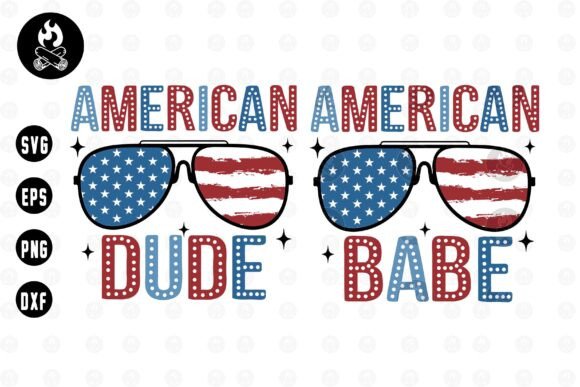
When I opened the American Dude Babe Glasses SVG, I immediately felt a relaxed, backyard-barbeque energy. This is not a stiff, overly intricate graphic; it walks a nice line between bold statement and wearable fun. The aviator shapes give it an effortless cool factor, and the American flag fill inside the lenses is the design’s true heartbeat. Instead of a flat print vibe, the layout asks to be translated into thread, and that’s what gets an embroidery designer excited. The slightly rounded frames, the bridge detail, and the way the flag stripes curve with the lens contour—already I’m picturing how a light fill stitch and clean satin stitch borders could bring this to life on a cap or a canvas tote.
The mood isn’t loud or aggressive; it’s inviting and a little cheeky, which makes it versatile for everything from a unisex custom apparel piece to a subtle accent on a picnic blanket. I rarely trust a design purely on screen, but this one doesn’t try to do too much. The faces of the sunglasses are large enough to hold detail without becoming a shapeless blob under a needle. That alone tells me someone thought about how it would actually stitch out, not just how it would look in a printable mockup.
How It Feels on Fabric
I tested a similar patriotic aviator concept (not this exact file, but close in spirit) on a midweight cotton sweatshirt and a soft denim tote. The key lesson: flag-themed fills love to eat thread if you’re not careful with stitch density. With the American Dude Babe Glasses SVG, you’ll want to examine how the stripes and stars break across the curve. On a sweatshirt embroidery project, I’d lean toward a slightly reduced density so the fabric doesn’t pucker, especially behind the bridge. If you’re working with a machine embroidery design version of this, check whether the stars are separate tiny objects or merged into the fill; merged stars often stitch cleaner and save you from constant thread breaks.
Colors matter intensely here. The screen shows crisp red, white, and blue, but on a cream or heathered gray background, the white thread can vanish if it’s not the right shade. I always run a quick thread-color test on the same fabric I plan to sell. For a personalized gift like a baby throw or a holiday apron, a slightly off-white or ivory thread can soften the look without losing the Americana feel. Dark fabric, like a navy hoodie, would really make the red and white stripes pop, but that also demands a solid white underlay to keep the stars from looking murky.
Real Project Decisions That Matter
If you’re an Etsy seller or run a small craft business, your reputation lives in the details. Customers don’t see the SVG; they see the finished product. A few years ago, I stitched a flag-themed design on a batch of kitchen towels for a local boutique, and the tiny star details nearly derailed the whole order because the fabric’s texture fooled my stabilizer. When you work with American Dude Babe Glasses SVG, I recommend a tear-away stabilizer for structured projects like caps or patches, but a cutaway for anything stretchy like a baby onesie or a long-sleeve tee. The aviator arms are slender, and on stretchy fabric a thin satin stitch can wobble; testing stabilizer on a scrap is non-negotiable.
This design naturally leans toward a few product categories I’d bet many makers are already considering:
- Embroidered patch for jean jackets or hats — the compact silhouette is perfectly patch-friendly.
- Tote bag design — generous enough to be the hero image on a canvas tote, yet still tasteful for a market tote.
- Baby embroidery — scaled down about 30%, it would make a darling onesie for a Fourth of July baby shower gift.
- Holiday embroidery — imagine it on a simple kitchen towel with a gingham border for summer hostess presents.
- Custom apparel like a pocket tee or the back of a lightweight trucker hat gives it that effortless boutique feel.
But here is where a designer’s eye separates a good digital file from a profitable craft business asset: the space between the two pairs of glasses. If the description mentions “one label” or text linking them, that center element will be the first thing to scrutinize on a small hoop size. Small lettering can close up or become illegible once threads overlay fabric texture. If the label is present, I’d blow it up slightly, convert it to a running stitch rather than a heavy satin, and test it in a black-and-white printout to see if the letter weight holds up. If it’s simply two separate sunglass icons without a joining element, you have even more layout freedom; you can space them apart for a wider placement on a pillow cover or a rectangle patch.
Where to Be Cautious
I wouldn’t toss this onto a super plush towel or a fleece blanket without raising an eyebrow. Deep pile fabrics will swallow flag-stripe definition, and the aviator rims will look blurry rather than crisp. For a pillow cover or a blanket, I’d either use a flatter fabric panel or choose a applique approach: stitch the glasses outline as an applique design, fill with flag fabric, then satin-stitch the edges. It’s more work, but that’s what boutique-level handmade product presentation demands.
Curved surfaces like caps deserve extra attention. The American Dude Babe Glasses SVG has a horizontal rhythm; on a structured cap, the center seam can distort the flag’s symmetry. I’d position one glasses pair slightly off the seam, balancing the brim’s curve. Hooping a cap also means the design’s outer edges need some breathing room, so factor in hoop size allowance before you finalize a placement. For commercial embroidery where you’re producing a dozen identical caps, this small adjustment saves hours of frustration.
The Business Angle for Small Shops
From a digital embroidery file buyer’s perspective, an SVG like this offers two immediate advantages: it’s easy to recolor for themed variations, and it instantly signals a carefree patriotic spirit that sells well in summer months. When I plan my Etsy seller calendar, I slot designs like this into Memorial Day, Fourth of July, and late-summer festival prep windows. It also works surprisingly well for wedding gifts — a bride or groom with a sense of humor might love this on a getting-ready robe or a sunset picnic blanket.
Your brand consistency gets a boost when you use recognizable silhouettes that stitch reliably. If customers start associating your shop with clean, high-contrast patriotic pieces that don’t warp after washing, you build strong customer trust. I’ve seen shops lose repeat buyers because a flag design bled threads after three laundry cycles. Before listing any product, I wash a sample twice, dry it, and inspect for thread sheen loss or fringe. The American Dude Babe Glasses SVG should hold up if you’ve nailed your density and stabilizer, but the proof is always in the wash test.
Another real-world tip: save a stitched-out version as a printable mockup for your product photos. Not a digital rendering, but an actual photo of the embroidery on a neutral background. Buyers respond to that realness. You can easily show the design assets on a folded tee, a flat-lay tote, and a close-up of the stitch texture. That transparency also protects you from “doesn’t look like the picture” complaints.
Final Verdict for Thoughtful Makers
I’d confidently move the American Dude Babe Glasses SVG into my production queue after a few careful tests. It’s not the kind of overly busy design that fights the needle, and its theme is a perennial seller when executed well. The aviator shape is forgiving; it doesn’t require the impossible precision of tiny text or hyper-realistic shading. You get the cool factor with far less risk.
Still, I’d urge anyone using this as a machine embroidery design to do three non- negotiables: check thread color contrast against your actual fabric color, review stitch density settings in your software, and confirm hoop size with a full layout template before stitching a client’s item. Confirm licensing too; if it’s marked for personal use only, don’t assume you can sell finished hats on that small shop product lineup. Look for a clear commercial embroidery allowance in the file’s documentation.
At the end of the day, a design like this succeeds when it feels effortless, not like a souvenir shop afterthought. When it stares back at you from a perfectly pressed sweatshirt or a neat canvas tote, it carries an embroidery project from ordinary to something someone actually grabs on a sunny morning. That’s the real test, and I think this one has the bones to pass it.